what is the advantage of using cloud design:
- On-demand computing power
- We can scale it up/sown based on the need
- Different clients can shar ethe same cloud (referred as multitenancy)
- Can access the data from anywhere
Virtual Networks:
Can also have virtual Networks in the cloud computing infrastructure.
When using large physical servers (server farm), we can have redundancy which is the deliberate duplication of critical components and systems so that if one fails, another immediately takes over without service interruption.
We can switch from physical servers into Virtual servers to solve this problem.
Because of that we will also virtualize the Network infrastructure.
Referred to Network Function Virtualization (NFV).
NFV:
- Same functionality as the physical network
- We can manage it from the Hypervisor
- Using NFV, we can quickly deploy network functions from the Hypervisor
Connecting to the Cloud:
-
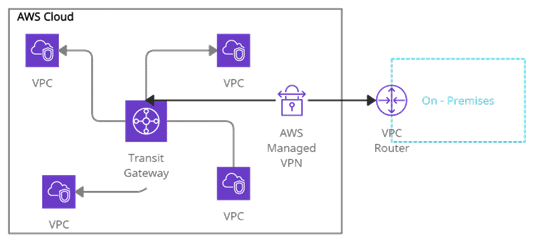
Virtual Private Clouds (VPC) is a isolated virtual network inside a public cloud where you control IP addressing, subnets, routing, and security, as if it were your own private data center. Used for Databases and application servers
-
Using a transit Gateway (a cloud router) we can connect many VPCs to other VPCs or to Users.
-
VPCs are commonly on different IP subnets. connecting to the cloud is often through a VPN
-
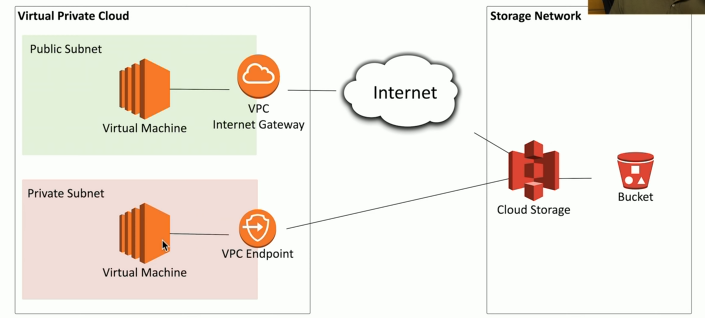
Connecting the cloud to the internet will require us to us a device called NAT gateway (Network address translation).
-
NAT gateway has security rules that in can connect the private cloud subnet to the internet but cannot connect the internet to the private cloud subnet (one-way connection) making it safer to the host to have a safer connection to the outside network.
-
a VPC Endpoint gives us direct connection between a VPC on on cloud provider to a VPC on another cloud provider.
-
Many cloud providers also use a firewall for additional security to your VPCs.
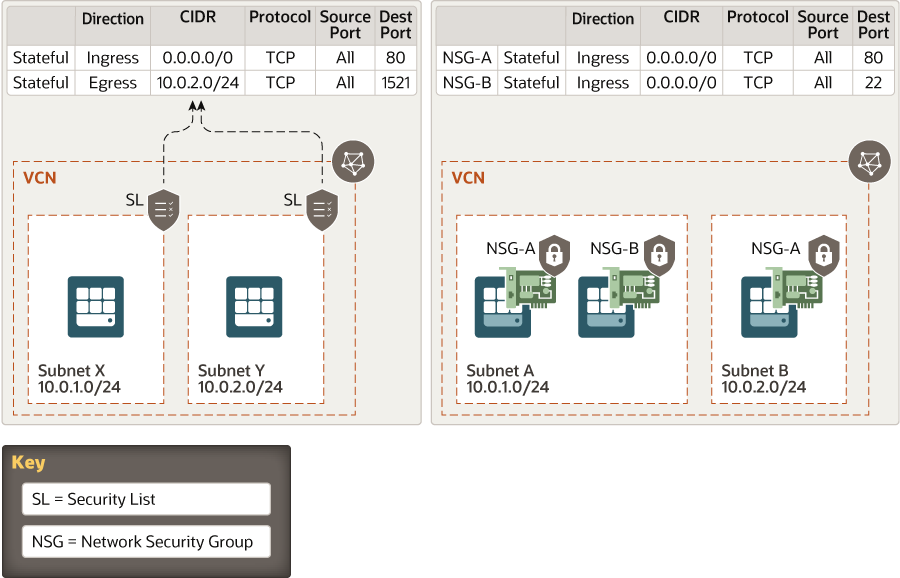
Network Security List (SL):
- Assign a security rule to an entire IP subnet. (Those configurations applies to all devices in that subnet).
- Can be very broad and difficult to manage.
- Broad rules may not provide the right level of security.
Network Security Groups (NSG):
- Assign a security rule to a specific device and network connection.
- Can be more precise than SL.
- Better control and granularity.
Cloud Models:
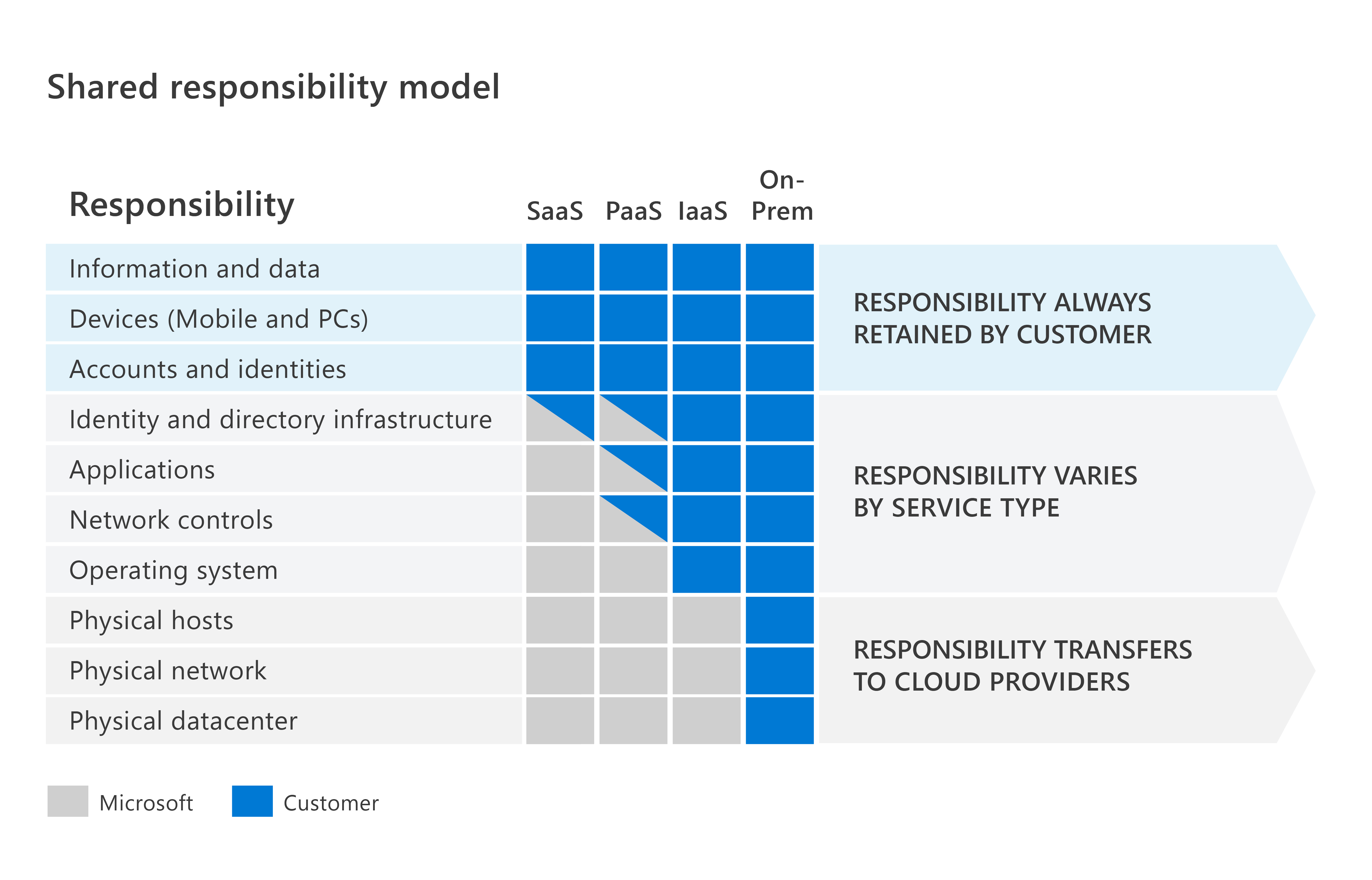
Software as Service (SaaS):
- Simple, no local installation
- Login and use the app
- Everything is stored on a third party cloud platform
Example: Google mail, Office 365.
Infrastructure as a Service (IaaS):
- Sometimes called Hardware as a Service
- All you need is the computing resources to run the application
- You’re still responsible for the management and for the security
- Data is still in a third party cloud, but you have much more control over the access and security.
Example: Web server providers.
Platform as a Service (PaaS):
- No server, no software, no maintenance team.
- Someone else handle the platform, you handle the development.
- You don’t have direct control over the data, people, or infrastructure.
- Trained security professionals are watching your stuff.